Why Public Education Determines the Success of Enforcement Programs
When automated traffic enforcement programs get discontinued, the cameras are rarely the problem. The public education strategy — or the lack of one — almost always is.
Evidence-based enforcement programs depend on community awareness and buy-in to achieve the desired safety outcomes. Drivers who understand why a school zone camera exists, how they make their communities safer, how citations are issued, and where program revenues go are significantly less likely to view enforcement as arbitrary or punitive. That shift in perception isn’t incidental, it’s what separates programs that endure from programs that get repealed.
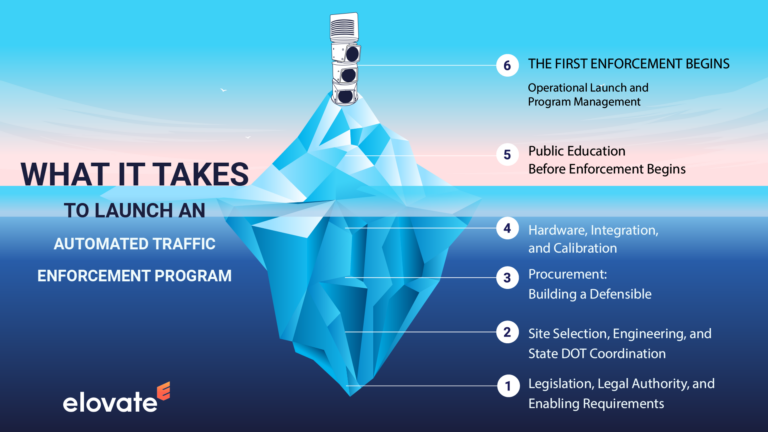
For jurisdictions considering or expanding Automated Traffic Enforcement (ATE) programs, public education is not a communications task to hand off after launch. It is a core program design decision that belongs in the planning phase and in the vendor conversation.
The Compliance Gap That Education Closes
Speed and red-light cameras don’t reduce crashes simply by issuing citations. They reduce crashes by changing driver behavior, and that behavior change requires awareness and understanding.
NHTSA research consistently shows that speed enforcement effectiveness depends on perceived detection risk. When drivers don’t know a camera is present, or don’t believe it’s functioning, they don’t adjust their behavior. The camera issues citations, but the safety outcome — the one that justifies the program politically — is diminished.
Before-and-after crash studies in jurisdictions with robust public education components show stronger behavioral effects than those without. The Insurance Institute for Highway Safety has documented this pattern across both red light and speed camera deployments: public awareness and education campaigns correlate with earlier and more sustained speed reductions.
This isn’t theoretical. Baltimore City’s red light enforcement program, which Elovate supports, operates in a dense urban environment where the case for education is especially strong — multi-language residents, varied media consumption, and heightened political scrutiny all make proactive communication essential to program integrity.
Work Zones Are the Highest-Stakes Example
National Work Zone Awareness Week, observed each April, exists for a reason: work zones are among the most dangerous and most misunderstood enforcement environments in the country.
FHWA data shows that thousands of workers and drivers are killed or injured in work zones annually — and that driver inattention and speeding are primary contributing factors. Automated enforcement is one of the most effective countermeasures available. But it only works when drivers understand the stakes.
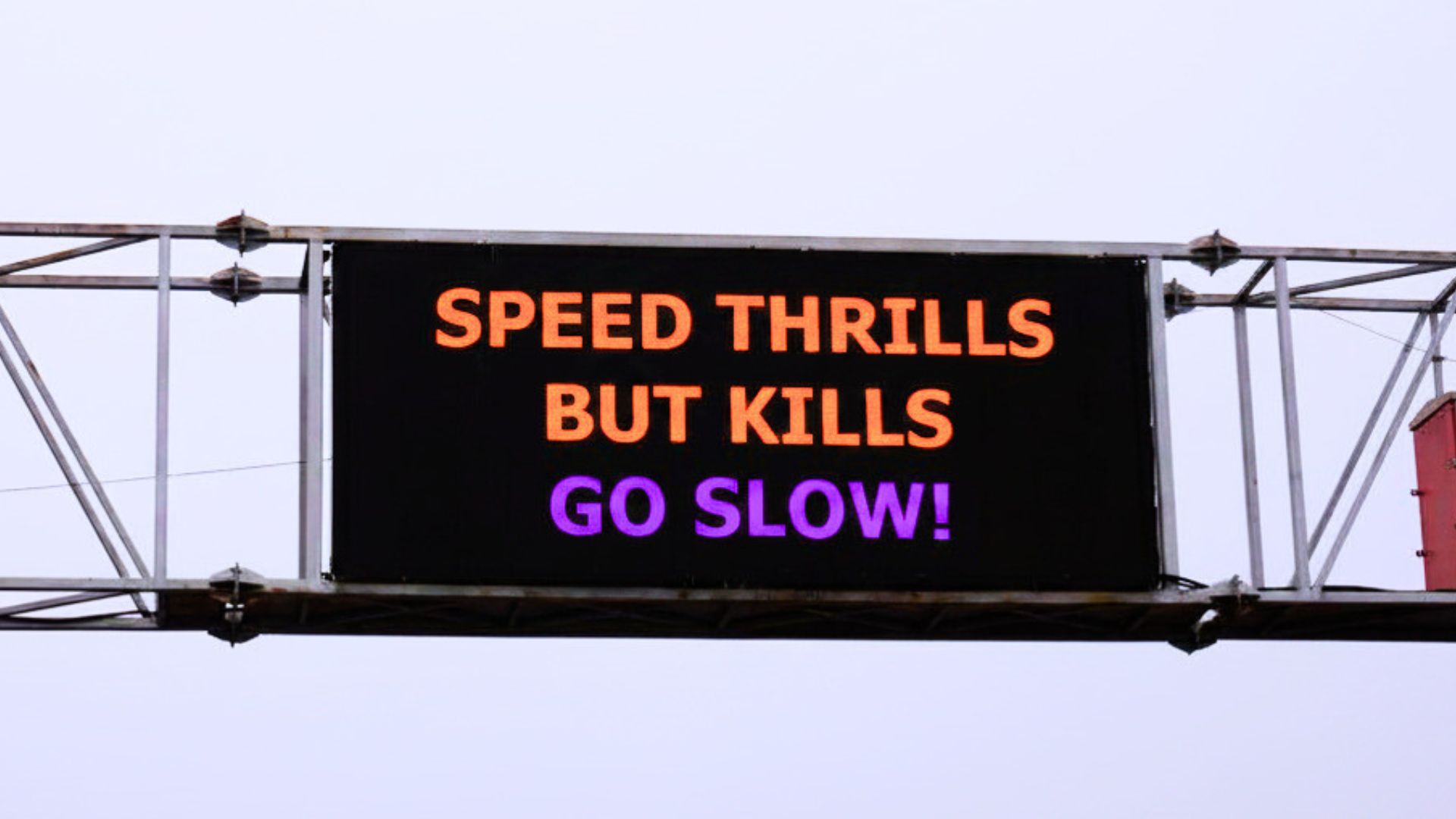
Virginia’s work zone speed camera program, which Elovate now supports at the state level, illustrates the dynamic clearly. Work zone cameras operate in environments where the physical hazard is obvious, but the enforcement presence is not always expected. Public education campaigns — warning signs, social media campaigns, legislative messaging — bridge that gap. They convert passive awareness (“there’s construction ahead”) into active behavioral adjustment (“I need to slow down; this is enforced”).
Without that education layer, citations spike, complaints spike, and programs face political pressure regardless of their safety record.
Read more: How Public Education Supports the Effectiveness of Traffic Enforcement
What Effective Public Education Actually Looks Like
Generic awareness is not enough. The most effective ATE public education programs are targeted, multi-channel, and sustained — not a one-time press release at program launch.
Effective components include:
- Pre-launch media and signage strategy — warnings, advance notice, and community briefings before any citations are issued
- Meet residents where they are — social media campaigns, print materials distributed at community events, digital displays, and direct mail that reach people through the channels they already use
- Plain-language explanation of the adjudication process — how to contest a citation, what the review process looks like, and how revenues are used
- Ongoing reporting — periodic program data releases that show crash trends, citation volumes, and speed compliance rates
- Stakeholder briefings — city council updates, community association presentations, neighborhood-level meetings
Baltimore City’s program reflects several of these elements in practice. The city’s approach to red light enforcement has included community communication as a central component of program management — not a downstream afterthought.
This is also where the generalist agency model falls short. Municipalities that outsource public education to firms unfamiliar with ATE program structure often end up with messaging that looks polished but can’t answer the questions residents actually ask — about citation processes, adjudication timelines, vendor roles, or how program revenues are used. The cost is measured not just in dollars but in complaint volume, council scrutiny, and program credibility.
Learn more about Elovate’s Public Education
What Vendor-Led Public Education Actually Looks Like
The gap between a checklist of best practices and a program that actually executes on them usually comes down to who owns the work. Responsible ATE vendors treat public education as a program deliverable — designed, produced, and deployed with the same rigor as the enforcement technology itself.
In practice, that means campaign assets purpose-built for each program type and jurisdiction. A red light enforcement campaign in a dense urban environment requires different creative, different channels, and different messaging emphasis than a work zone speed camera program on a rural interstate. The audience, the compliance concern, and the political context are all distinct. Templated collateral doesn’t account for any of it.
Multi-channel execution is the baseline. The most effective programs integrate digital and traditional outreach simultaneously — geo-targeted, client owned social media campaigns focused on high-violation corridors, direct mail trifolds that can travel with citation notices or stand alone as awareness pieces, and press releases drafted to the specific program type rather than repurposed from a prior jurisdiction. Each channel serves a different segment of the public, and the messaging across all of them has to be operationally consistent.
The citation itself is an education channel that most programs underuse. A notice of violation that explains the program clearly — how the image was captured, why the officer reviewed it, that no points are assessed, how to contest — answers the questions residents call about before they have to call. Fewer inbound calls, lower contestation rates, and less political friction are measurable downstream outcomes of well-designed citation communications.
Transparency infrastructure is increasingly where programs are differentiated in the eyes of elected officials and community advocates alike. Public-facing program dashboards — showing enforcement activity, citation volumes, financial accountability, and crash trend data over time — give journalists, council members, and residents a place to go with questions instead of directing them to a city communications office that may not have the answers. Jurisdictions exploring this model recognize that proactive transparency is considerably cheaper than reactive damage control after a critical news story.
Education as Procurement Criteria
For jurisdictions currently in RFP or vendor evaluation phases, public education support should be an explicit evaluation criterion — not an optional service add-on.
The questions worth asking prospective vendors include:
- Does the vendor have experience developing public education materials specific to ATE program types (work zone, school zone, red light)?
- Can the vendor provide jurisdiction-specific, client branded materials, not templated collateral?
- What does the vendor’s communication support look like during a program’s first 90 days — the window when complaint volume is typically highest?
- How does the vendor support elected officials in fielding constituent questions?
The Vision Zero Network and National League of Cities both identify community engagement as a foundational element of sustainable traffic safety programs — not a peripheral concern. Vendors who treat it as one are not set up to help their clients succeed.
Conclusion
Public education is the mechanism through which enforcement programs achieve their safety mission. Cameras document violations. Education changes behavior. Both are required — but only one is optional in the absence of a committed vendor partner.
For jurisdictions like Baltimore City and state-wide programs managing complex urban enforcement environments, and for state DOTs administering work zone programs across high-visibility corridors, the investment in education infrastructure is what converts a compliance program into a safety outcome. As ATE programs expand into new markets and face renewed public scrutiny, the jurisdictions that build education into their program design from day one will be the ones that last.
Frequently Asked Questions
Public education ensures drivers understand where cameras are deployed, why enforcement is occurring, and how the citation process works. Awareness increases behavioral compliance — which is the mechanism through which ATE programs actually reduce crashes, not citation volume alone.
Effective work zone ATE education includes advance warning signage, coordinated media outreach before enforcement begins, plain-language citation dispute information, and ongoing public reporting on speed compliance and crash trend data.
Programs with strong community awareness components generate fewer complaints, face less political backlash, and demonstrate higher public support in independent surveys. Transparency about program operations — including vendor compensation structures and revenue use — is a central factor in long-term program sustainability.